

Food presentation is often described as the art of making dishes visually appealing before they are tasted. In the restaurant industry, presentation is not merely decoration—it is a powerful tool that shapes customer perception, enhances dining satisfaction, and even influences purchasing decisions. The way a dish looks can determine whether a guest feels excited, impressed, or disappointed before taking the first bite.
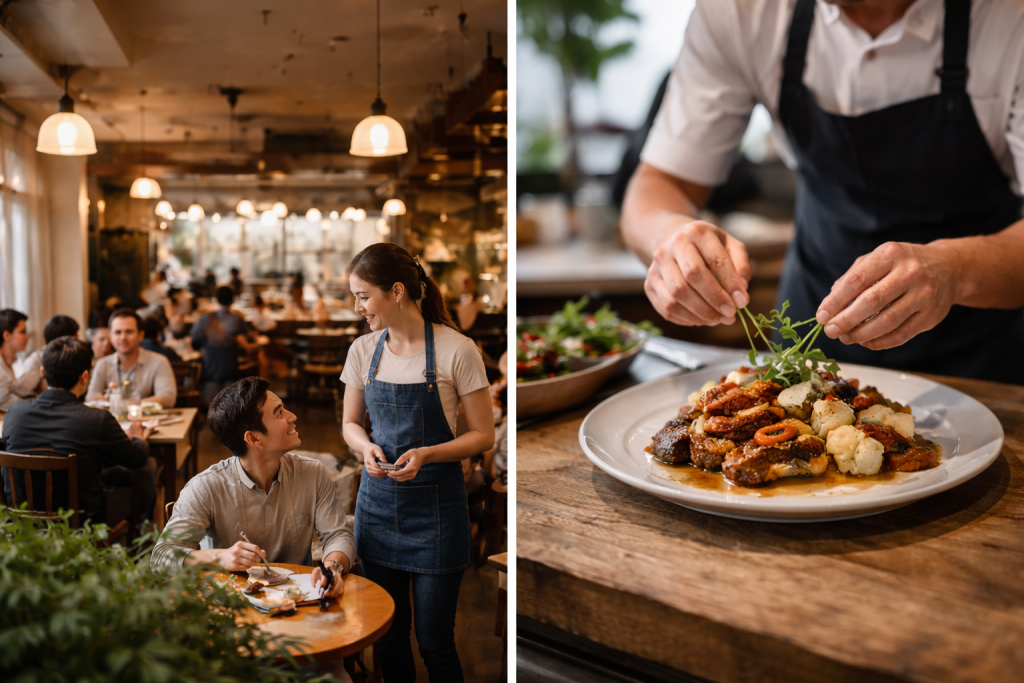
The human brain naturally associates visual beauty with quality. When a plate is arranged thoughtfully with vibrant colors, balanced portions, and artistic garnishes, diners instinctively expect it to taste delicious. This psychological effect means presentation can enhance flavor perception. Even simple dishes appear more appetizing when plated attractively, proving that aesthetics can elevate the overall dining experience.
Professional chefs understand that plating is a form of storytelling. Each element on the plate communicates something about the dish—its ingredients, origin, or style. For example, minimalist plating with clean lines suggests elegance and sophistication, while rustic arrangements evoke comfort and tradition. By designing plates carefully, chefs express creativity and reinforce the restaurant’s identity.
Color contrast is one of the most important aspects of presentation. Bright vegetables, fresh herbs, and colorful sauces create visual interest and make dishes look lively. A plate dominated by a single color may appear dull, even if it tastes excellent. Using contrasting shades helps highlight ingredients and guides the diner’s eye across the plate.
Texture also plays a role in visual appeal. Combining smooth sauces, crisp garnishes, and tender proteins not only enhances flavor but also adds depth to the presentation. Guests often appreciate dishes that look dynamic and layered rather than flat or monotonous.
The choice of plate and serving ware is equally significant. White plates are popular because they allow food colors to stand out, while dark plates can create dramatic contrast for lighter dishes. Unique serving vessels—such as wooden boards or stone plates—can make a dish memorable and Instagram-worthy, which indirectly promotes the restaurant through social media sharing.
Presentation also affects perceived value. Customers are more willing to pay premium prices for dishes that look refined and artistic. A beautifully plated dessert, for instance, feels more luxurious than the same dessert served plainly. This perception allows restaurants to position themselves as upscale establishments even if ingredient costs remain moderate.
Consistency in presentation is crucial for maintaining brand reputation. Every plate served should look similar to ensure customers receive the same visual experience each visit. Standard plating guidelines, training, and quality checks help maintain this consistency across different shifts and staff members.
In the digital age, presentation has gained even greater importance because of social media. Diners frequently photograph their meals and share them online. Attractive dishes naturally attract more photos, which function as free marketing for the restaurant. A visually stunning plate can reach thousands of potential customers through a single post.
However, presentation should never overshadow taste. While appearance draws attention, flavor determines satisfaction. The best restaurants strike a balance where presentation enhances rather than distracts from taste. A beautifully plated dish that lacks flavor will disappoint guests, while a delicious but unattractive dish may fail to impress initially.
Another essential component is personalized service. Customers appreciate when staff treat them as individuals rather than just another order number. Addressing guests politely, making eye contact, and listening carefully to their preferences makes them feel valued. Some restaurants even keep notes about regular customers’ favorite dishes or dietary restrictions so they can provide tailored recommendations.
Food presentation is also part of the experience. A beautifully plated dish excites the eyes before the first bite. Chefs often use color contrast, garnishes, and creative arrangements to make dishes visually appealing. When food looks attractive, customers feel they are receiving something special, and they are more likely to share photos online, which benefits the restaurant’s reputation.
Timing is another factor that shapes dining satisfaction. Customers do not want to wait too long for their food, but they also do not want dishes to arrive too quickly before they are ready. Skilled restaurants coordinate kitchen and service staff to maintain the perfect pace. Appetizers, main courses, and desserts should arrive at comfortable intervals so guests can enjoy each stage of the meal.
Music and scent also influence emotions. Gentle background music can make a space feel elegant or cheerful, while pleasant aromas from the kitchen stimulate appetite. Restaurants often choose specific playlists and maintain good ventilation to ensure a comfortable environment.
Technology has become an important part of modern dining. Online reservations, digital menus, contactless payments, and feedback systems make the process smooth and convenient. Customers appreciate when restaurants respect their time and offer easy solutions.
Special touches can transform a simple meal into a memorable event. Complimentary desserts for birthdays, handwritten thank-you notes, or a chef personally greeting guests can create emotional connections. These moments stay in customers’ minds long after the meal ends.
In summary, a memorable dining experience is a combination of atmosphere, service, presentation, timing, and thoughtful details. Restaurants that focus on these elements do more than serve food—they create moments of joy. When customers leave with a smile and a story to tell, the restaurant has truly succeeded.
In conclusion, food presentation is a powerful element that influences how customers perceive, enjoy, and remember their dining experience. By focusing on color, texture, plating style, and consistency, restaurants can transform ordinary meals into memorable culinary experiences. When visual appeal and flavor work together, they create dishes that delight both the eyes and the palate.